Thread vs BLE Smart Tags for Cluttered Attic Storage Tracking
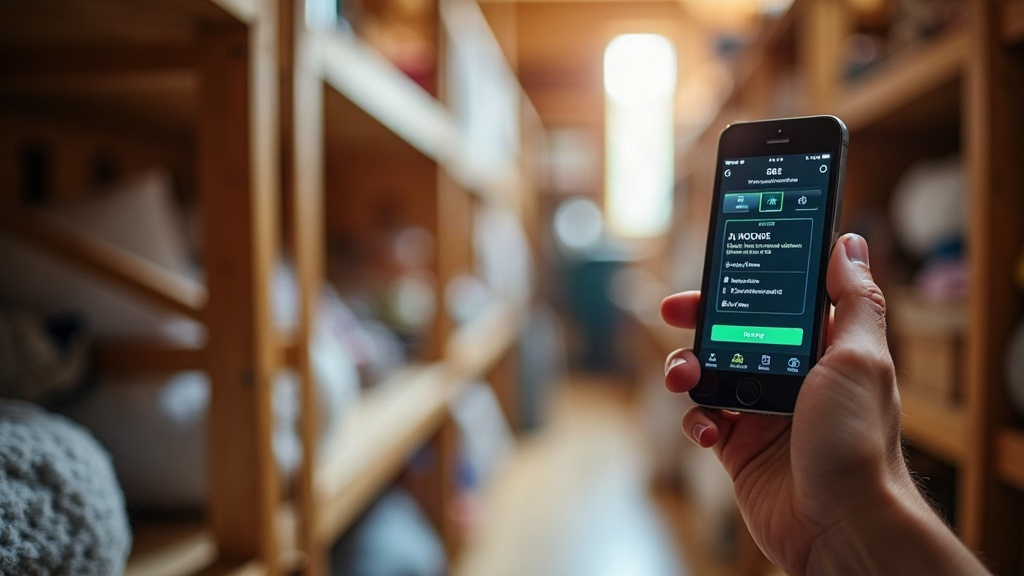
If you’ve ever climbed into your attic hunting for one labeled box buried among forty identical totes, you already know why tracking matters in a space like that. The real question isn’t “should I tag my stuff,” it’s which wireless tech actually holds up in an attic: Thread smart tags or BLE (Bluetooth Low Energy) tags. Short version: BLE tags are cheaper and dead simple for a small collection, but Thread tags hold up far better in a dense, multi-level attic because they form a self-healing mesh instead of relying on one shaky connection back to your phone.
Why Attics Are a Uniquely Hard Environment for Tracking
Most smart-tag marketing is shot in a living room with nothing between the tag and the phone. An attic throws four problems at it simultaneously:
- Metal roofing, HVAC ductwork, and insulation soak up and bounce radio signals around unpredictably.
- Stacked boxes, sometimes floor to rafter, physically block the line between a tag and your phone or hub.
- Temperature swings (100°F+ in July, below freezing in January in a lot of climates) wear batteries down faster than normal.
- Distance from the router — the attic is usually the single farthest point from your main Wi-Fi access point in the house.
Any tag has to survive all four at once. That’s exactly where the Thread vs. BLE question stops being theoretical.
How BLE Smart Tags Work
BLE tags (AirTag, Tile, Chipolo, the usual suspects) broadcast a low-power Bluetooth signal that your phone, or nearby phones in a crowdsourced network like Apple’s Find My, pick up directly.
Strengths:
- Cheap, $20 to $35 a tag
- No hub needed for basic proximity detection
- Battery lasts 6 to 12 months on a coin cell
- Pairing takes about 30 seconds in the app
Weaknesses once you’re in the attic:
- Range collapses through walls, insulation, and stacked totes, often down to 10 to 15 feet versus 100+ feet outdoors
- Each tag only talks to your phone. There’s no relay, so signal from a box buried deep in a back corner just doesn’t make it out
- Find My’s crowdsourced magic does nothing up there, since there’s no stream of strangers’ iPhones walking past your rafters
- Precision finding (UWB) only kicks in at close range, so you’re still physically walking the attic, flashlight in hand, listening for a beep
How Thread Smart Tags Work
Thread is a low-power mesh protocol, the same one running under Matter smart home gear. Thread tags don’t call your phone directly. Instead they hop their signal through other Thread devices, like border routers, smart plugs, hubs, until the data lands on your home network.
Strengths:
- Self-healing mesh: block one hop with a wall of boxes and the signal just reroutes through the next nearest Thread device
- Whole-house coverage: a couple of $15 Thread smart plugs, or a HomePod mini or Echo with a Thread radio, act as extenders
- Always-on monitoring: you get live location or status without having to stand right next to the box, phone in hand
- Better suited to permanent setups, like labeling fixed storage zones (left attic bay, right bay, eaves storage) and leaving them
Weaknesses:
- You need at least one Thread border router (HomePod mini, Nest Hub 2nd gen, an Eero with Thread, something like that)
- Tags run a bit pricier, $25 to $45 each
- Fewer tag models on the market right now since Thread tags are the newer option
Side-by-Side Comparison for Attic Storage
| Factor | BLE Tags | Thread Tags |
|---|---|---|
| Typical range through clutter | 10–15 ft | 30–50 ft per hop, extendable via mesh |
| Needs a hub | No | Yes (border router) |
| Battery life | 6–12 months | 6–18 months (mesh reduces per-device radio strain) |
| Cost per tag | $20–$35 | $25–$45 |
| Best for | Few items, frequent handling | Dozens of boxes, permanent storage zones |
| Real-time status without phone nearby | No | Yes |
Which Should You Choose?
- Small attic, fewer than 10 boxes, occasional access: BLE wins on price and simplicity, full stop. Slap a Tile or AirTag on the boxes you actually dig for, holiday decorations, tax paperwork, and you’re done. No reason to overthink it.
- Large attic, 20+ boxes, multiple storage zones, or a finished/insulated attic that kills signal: Thread is worth the extra half hour of setup. Drop one or two border routers (a smart plug is fine) at opposite ends of the space and you get mesh coverage across the whole thing.
- Mixed approach: A lot of organized people run both, BLE on a “top 10 I need constantly” shortlist, and Thread (or even a plain barcode/QR app) for cataloging everything else.
Practical Setup Tips
- Map out zones before you tag anything. Don’t slap tags on boxes randomly and sort it out later, you’ll just end up re-labeling everything in a month.
- Walk the farthest corner before you seal a box. Confirm the signal actually reaches there, not just three feet from the attic door.
- Put a Thread border router near the attic access point, not two floors down, so you’re not burning hops before the signal even gets started.
- Swap batteries by season, not by “whenever.” Attic heat chews through batteries noticeably faster than a climate-controlled closet would.
Conclusion
For casual, light attic use, BLE tags are still the cheapest and easiest route, no argument there. But once your attic gets genuinely messy (multiple zones, dozens of boxes, walls and ductwork killing the signal) Thread’s mesh setup solves the one thing BLE just can’t: reliable coverage without needing your phone a few feet from every single box. Pick based on how big and cluttered your attic actually is, not the sticker price on the tag, and you’ll finally stop losing track of what’s up there.