Smart Switches vs Smart Bulbs for 3-Way Stairwell Lighting
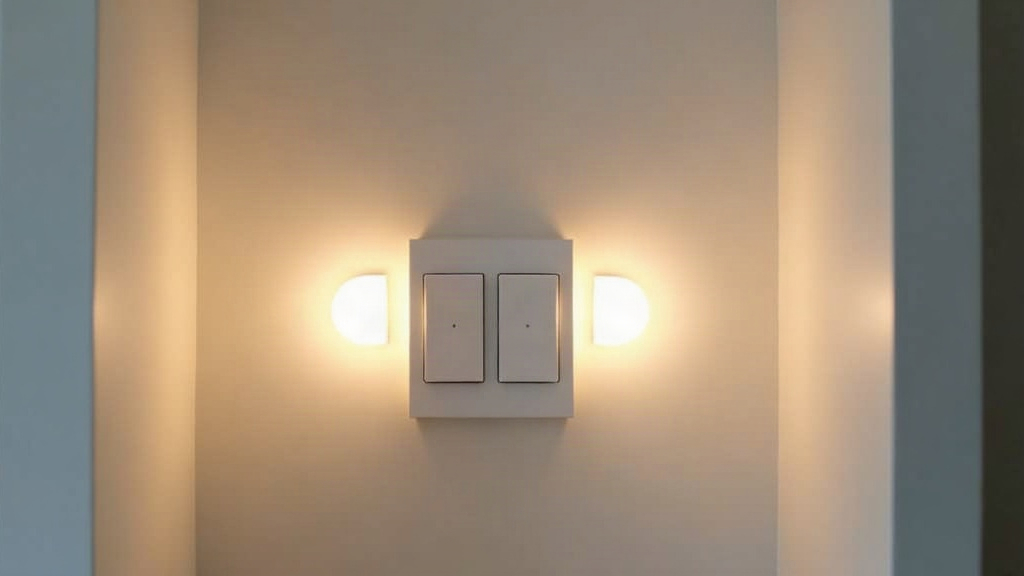
If you’re dealing with a stairwell where two or three switches control the same light, the smart switch vs smart bulb question isn’t academic the way it is for, say, a single bedroom lamp. For 3-way stairwell lighting, smart switches are usually the smarter call. They keep physical wall control working at every single switch location, and that matters a lot on stairs. Smart bulbs, by contrast, can leave you with dead zones the moment someone flips a traditional switch to “off.” Bulbs still have their uses though. Let’s get into it.
Why Stairwells Are a Special Case
Stairwell lighting is almost always wired as a 3-way circuit (sometimes 4-way), meaning two or more switches control one fixture so you can flip it on at the top of the stairs and off at the bottom, or the other way around. This traveler-wire arrangement is exactly where the switch-versus-bulb decision gets messy:
- Multiple physical switches need to stay in sync with each other.
- Stairs are a safety zone. A lighting failure here isn’t just annoying, it’s a hazard.
- The wiring is often decades old and may not have a neutral wire run to every box.
Smart Switches: The Reliable Default
Pros
- The physical switch always works. Anyone in the house, including your grandmother who’s never touched a smartphone, can flip it like a normal switch. No app, no “hey Google,” nothing.
- One brain, multiple locations. A 3-way smart switch kit (Lutron Caséta, Kasa KS200/KS225, Leviton Decora Smart, take your pick) pairs a main switch with an “auxiliary” or “add-on” switch. That second one just sends a signal back to the main switch, it doesn’t need its own hub wiring or smarts.
- Any bulb works. You keep whatever standard LED bulbs you already own. No proprietary bulb lock-in, no shopping around for compatible SKUs.
- Built for safety-critical spaces. Guests, kids, elderly relatives, none of them need to know anything about your smart home setup to use the stairs safely.
Cons
- You’ll usually need a neutral wire at each switch box. Lutron Caséta’s no-neutral switch is the big exception here, worth remembering if you’ve got older wiring.
- This is electrical work. Confident DIYers can handle it, but plenty of people call an electrician, and that’s typically $75 to $200 per switch location.
- Auxiliary switches are brand-locked. Buy a Kasa main switch and you need a Kasa add-on, not a Lutron one.
Smart Bulbs: Easier Install, Bigger Caveat
Pros
- No wiring, period. Screw in a Philips Hue, Wiz, or Govee bulb and you’re set up in the time it takes to make coffee.
- Per-bulb color and brightness control. Genuinely nice if you want warm ambient light on the stairs or a bit of accent color for atmosphere.
- Cheap way to test the waters before committing real money to a full smart home rollout.
Cons
- The 3-way trap. Here’s the catch: if anyone flips a wall switch to off, the bulb loses power entirely. No app, no voice assistant, nothing can reach it. In a stairwell with two or three switches, someone will eventually flip it out of habit.
- You’d have to train everyone in the house to never touch the physical switch, which kind of defeats the whole point for guests or kids who don’t know the rule.
- Cost adds up fast. If your stairwell has two or three separate fixtures, you’re buying two or three smart bulbs, often pricier in total than one smart switch kit.
The Practical Fix If You Choose Bulbs
Some people lock one or both traditional switches permanently in the “on” position, either with a physical switch guard or by swapping in a non-switching cover plate, and let the bulb be the only real control. It works. But you lose your backup: if the bulb’s Wi-Fi connection or the hub drops, there’s no manual override left for the stairs. That’s not a great trade-off for a space where you really want the light to just turn on.
Which Should You Choose?
| Scenario | Best Option |
|---|---|
| Multiple family members, guests, or kids use the stairs | Smart switch |
| You have a neutral wire at each box | Smart switch |
| No neutral wire, want to avoid rewiring | No-neutral smart switch (Caséta) or smart bulb with locked switch |
| You want color-changing accent lighting | Smart bulb (as a supplement, not primary control) |
| Renting and can’t modify wiring | Smart bulb |
Final Recommendation
For most 3-way stairwell setups, spend the money on a proper smart switch kit with a matching auxiliary switch. You keep the foolproof manual control stairs genuinely need, plus you still get scheduling, remote access, and voice control on top. Save smart bulbs for single-point fixtures, a hallway lamp, a reading light, somewhere losing switch access is a minor inconvenience rather than a safety issue.
Bottom line: smart switches win on reliability and safety in multi-switch stairwells. Smart bulbs win on easy installation and color features, but pair them with traditional 3-way wiring and you’re asking for trouble.