Automating Terrarium Humidity and Lighting with Zigbee Sensors
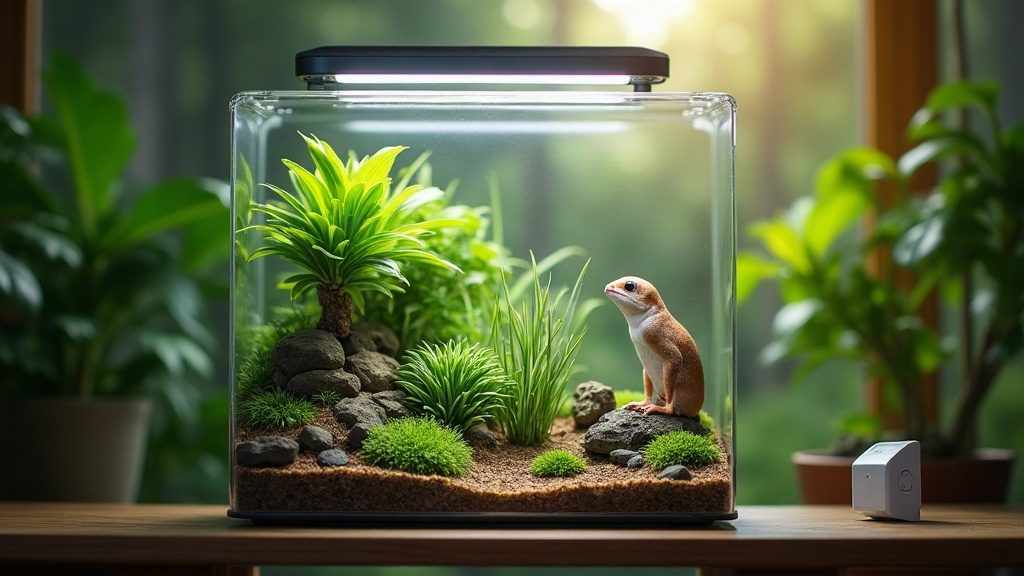
Maintaining the perfect microclimate in a terrarium is a constant, delicate balancing act. Let the air get too dry and your tropical frogs or geckos start showing signs of dehydration within days. Let the lighting schedule drift, and a reptile’s internal clock (and digestion) falls apart quietly, often before you notice anything’s wrong. Automating terrarium humidity and lighting with Zigbee sensors takes this stressful guesswork and turns it into something closer to a precise, hands-off science. Pair wireless environmental sensors with smart plugs, and suddenly your exotic pets or rare botanicals are living in an enclosure that actually mimics their natural habitat, instead of an approximation of one.
Why Choose Zigbee for Terrarium Automation?
When you’re automating systems that keep living animals alive, reliability isn’t a nice-to-have. It’s the whole point. Standard Wi-Fi smart plugs are everywhere and easy to set up, but most of them lean on cloud servers to function. Your internet drops for twenty minutes during a storm, and suddenly your heat lamp doesn’t fire on schedule.
Zigbee sidesteps that entirely. It’s a local, wireless mesh network protocol, and here’s why it’s become something of a gold standard for terrarium setups:
- Local Control: Zigbee hubs (Home Assistant, Hubitat, SmartThings, take your pick) process commands right there on your network. Internet goes down? Your humidity automations don’t care. They keep running.
- Low Power Consumption: Zigbee temperature and humidity sensors sip power from small coin-cell batteries, often lasting well over a year. That means you can tuck one discreetly inside the enclosure without snaking a cable through the glass.
- Mesh Network Reliability: Every plugged-in Zigbee device, including your smart plugs, acts as a signal repeater. The more devices you add, the stronger and more dependable the network becomes. Commands rarely, if ever, get dropped.
The Essential Hardware Checklist
To build a genuinely automated smart terrarium, you’ll want these core pieces in place:
- A Zigbee Hub/Gateway: Something like a Raspberry Pi running Home Assistant, paired with a Zigbee dongle (the Sonoff Zigbee 3.0 USB Dongle Plus is a common choice).
- Zigbee Climate Sensors: Compact units like the Aqara Temperature and Humidity Sensor work well and blend into the background.
- Zigbee Smart Plugs: Sturdy plugs rated for continuous use, controlling power to your “dumb” hardware: heat lamps, UVB tubes, misters, foggers.
- Environmental Hardware: The actual fogger, misting system, and lighting fixtures you’re planning to automate.
Automating Terrarium Lighting
Of all the environmental variables, lighting is the simplest to automate, and yet it shapes the health of your terrarium’s inhabitants more than most keepers realize.
Replicating Natural Day/Night Cycles
In the wild, day length shifts gradually with the seasons. Mechanical timers try to mimic this but tend to drift over months, losing a few minutes here and there until your “morning” light comes on at what’s effectively midafternoon for the animal. Plug your UVB and daylight bulbs into Zigbee smart plugs instead, and you sidestep that drift problem completely.
From your hub, you can build routines tied to the actual sunrise and sunset patterns of the animal’s native region. Program the lights to ease on at 7:00 AM and switch off at 7:00 PM, for instance. Want to go further? Stagger the lighting: a low-wattage ambient bulb kicks on first, then the intense basking lamp follows an hour later, roughly matching how dawn actually unfolds in nature rather than flipping from darkness to full brightness in an instant.
Automating Terrarium Humidity
Humidity is the variable that’s genuinely hard to manage by hand. Mist manually and you get a sharp spike in moisture followed by a rapid drop-off, an unstable rollercoaster that stresses animals more than a lot of keepers appreciate. Automate it, and you get a smooth, steady curve instead.
Precision Moisture Control
Place a Zigbee humidity sensor in the middle or lower half of the terrarium, somewhere shielded from direct spray so it’s reading actual ambient conditions rather than a wet sensor housing. Plug the misting system or fogger into a Zigbee smart plug.
Then set up a simple automation rule in your hub:
- Trigger: Humidity drops below 65%.
- Condition: Only between 8:00 AM and 8:00 PM.
- Action: Turn the mister on for exactly 15 seconds, then off.
This kind of micro-dosing keeps the environment humid without drenching the substrate, which is exactly the sort of thing that leads to bacterial growth or scale rot in reptiles if you’re not careful.
Failsafes and Best Practices
Any time you automate a living ecosystem, you have to plan for the hardware failing at some point, because it will, eventually. A heat lamp that never gets a shutoff signal, or a fogger stuck in the “on” position overnight, can turn a minor glitch into a genuine emergency.
- Set Maximum Run Times: Don’t rely purely on a sensor reading to decide when a device shuts off. Always layer in a timer failsafe too (“turn off mister after 60 seconds, no matter what the humidity reading says”).
- Sensor Placement: Keep Zigbee sensors away from direct heat and water. A small ventilated plastic guard around the sensor solves most of these problems cheaply.
- Push Notifications: Set your hub to ping your phone if temperatures cross a dangerous threshold, or if humidity drops sharply, which often just means the water reservoir ran dry and nobody noticed.
Conclusion
Automating terrarium humidity and lighting with Zigbee sensors changes the daily experience of keeping exotic pets or indoor tropical plants. Spend an afternoon or two setting up a local, sensor-driven system, and you no longer have to remember to mist the enclosure or manually flip lights on a schedule. What you get in return is something harder to put a price on: a genuinely stable, low-stress environment where your animals and plants can actually thrive, not just survive.